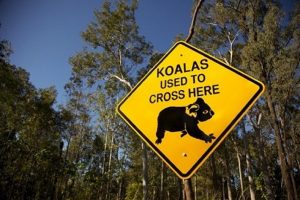
Koala Habitat Conservation - Its Not Looking Good for Koalas
Effects of Legislation Changes
Rose Adams explains how recent legislative changes have swept away many of the safeguards that were in place to protect koala habitat in Queensland, making it easier for developers to cut through the so-called ‘green tape’.
What happens to the koalas living in an area earmarked for development? In the very bad old days, animals were simply chased away, “thrown over the fence” (a quote from a former Town Planning officer) or just ignored. It was assumed they would move on, find new trees and somehow adapt to their changed circumstances.
The reality is, however, that koalas cannot successfully co-inhabit spaces where their food trees are drastically reduced to make way for housing. The accompanying roads, speeding cars, domestic pets, lights and noise all result in unbearable stress, injury and often their death of these iconic Australian animals.
Koala Habitat Protection before 2012
As people became aware of the rapidly diminishing numbers of koalas in Queensland (see next page for details) stricter measures were put in place to ensure koala habitat was protected. Prior to the change of government in 2012, the South-East Queensland Koala State Planning Policy SPP2/10 and accompanying mapping were intended to guide “koala-friendly development”.
In 2006, the Queensland Government realised land for housing and town development was becoming scarcer and opportunities for koala relocation were dwindling. Environmental offsets were introduced as a policy to ensure developers met their responsibilities to avoid harm to protected native plants and animals as much as possible. Where damage could not be avoided, they could mitigate the impacts by purchasing land in close proximity to the affected area, similar in species array and not already protected as a conservation area. In particular, koalas were recognised as having very specialised feeding habits and requiring relatively large habitats through which to range. At that time, offsets were seen as a last resort and were not to be used by developers to avoid their responsibilities to protect the environment, as required by the planning laws of the day.
Various strategies were suggested such as buying up land containing koala habitat before it could be developed then using funds from developers and relocating displaced koalas to these areas. Revegetation projects involving koala food trees were also funded.
The State Government undertook much intensive mapping but it was on a large scale, with only large tracts of land suitable for koalas included. This was graded in terms of the quality of habitat provided and various regulations were put in place to ensure core habitat was not developed. The planning failed to recognise small but important pockets of koala habitat, especially in urban areas, or to protect linkages between these and larger habitat areas. Freedom of movement between different areas is vital to ensure there is a healthy exchange of genetic material, ensuring a large gene pool and promoting species resilience.
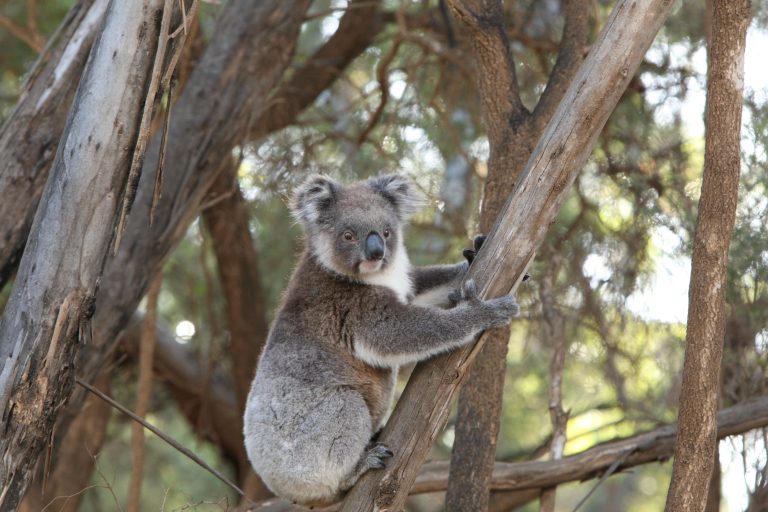
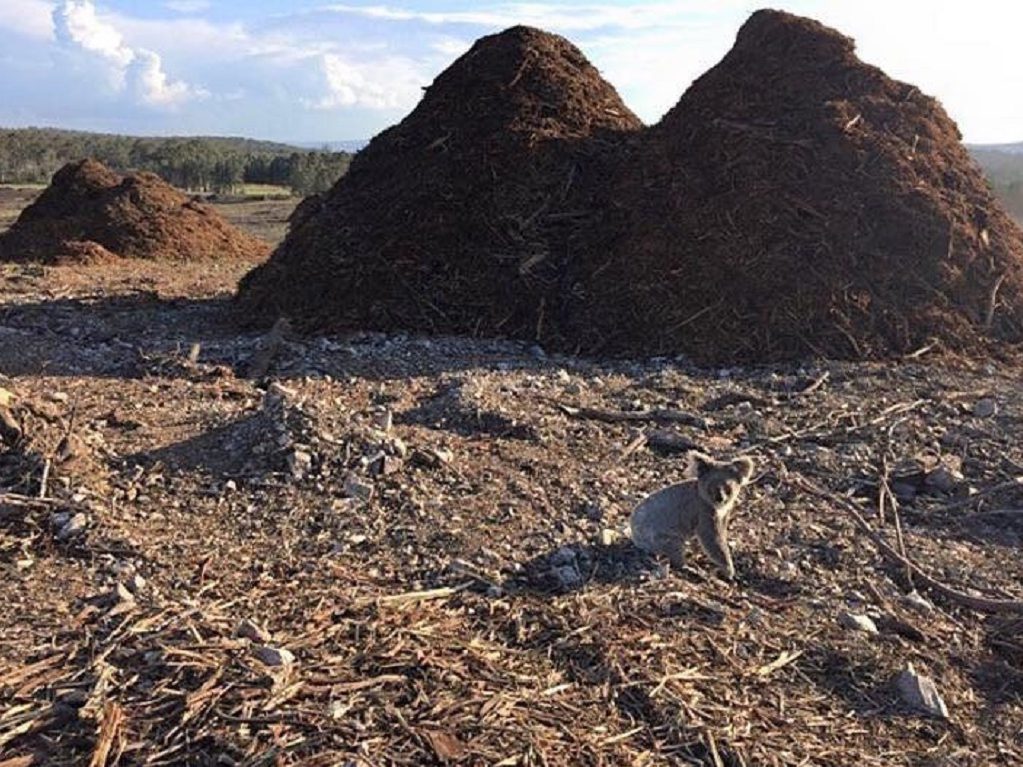
The Current Situation
Following the change of government in 2012, the existing 13 State Planning Policies, including the Koala SPP 2/10, were revoked and replaced with a greatly simplified new planning regime – the Single State Planning Policy with the ‘four-pillar themed’ approach. This new approach, that cuts the so-called ‘green tape’ (which had been developed after lengthy consultation and detailed study) is being delivered at the behest of the development industry, seeking to hasten development approvals and avoid the onerous conditions formerly applied to actually protect our native plants and animals.
The legislative changes that have occurred are sweeping and confusing and it now appears that only a very few tiny areas in South-East Queensland are mapped as “koala assessable development areas”. These small areas have a State Planning Policy Regulation but the rest of SEQ koala habitat appears to fall under the control of local government. Although there are guidelines stating how koalas are to be dealt with, the legal changes have been so swift and so drastic that local planning departments are struggling to interpret the new rules. Gecko understands legal advice is being sought by Councils in order to correctly interpret and apply the new regulatory framework. We will also provide an update following our discussions with the Department of Environment and Heritage Protection.
What we do know is that requirements are simpler, there is a level of self-assessment that may fail to identify the severity of impacts and the recent Environmental Offsets Act gives developers the opportunity to buy their way out of environmental responsibility, even in the few remaining koala assessable development areas.
In the rush to cram more and more people into this City, we have to make sure there is still room for our native wildlife but, at the moment, it’s not looking good for koalas.